Begin with the question, not the formula
Define the decision the workbook should support. Revenue by region, delayed orders and margin exceptions require different fields and checks. A formula is useful only when it answers a clear question.
Clean before calculating
Check dates, duplicates, blanks, text stored as numbers, inconsistent categories and refunds. Raw transactions are not automatically reliable revenue. Keep a clean-data step that another person can inspect.
Translate business rules into formulas
An IF statement should begin as plain language: if this condition is true, return this result; otherwise return that result. The same discipline applies to lookups, ageing rules and exception flags.
Use summaries to investigate
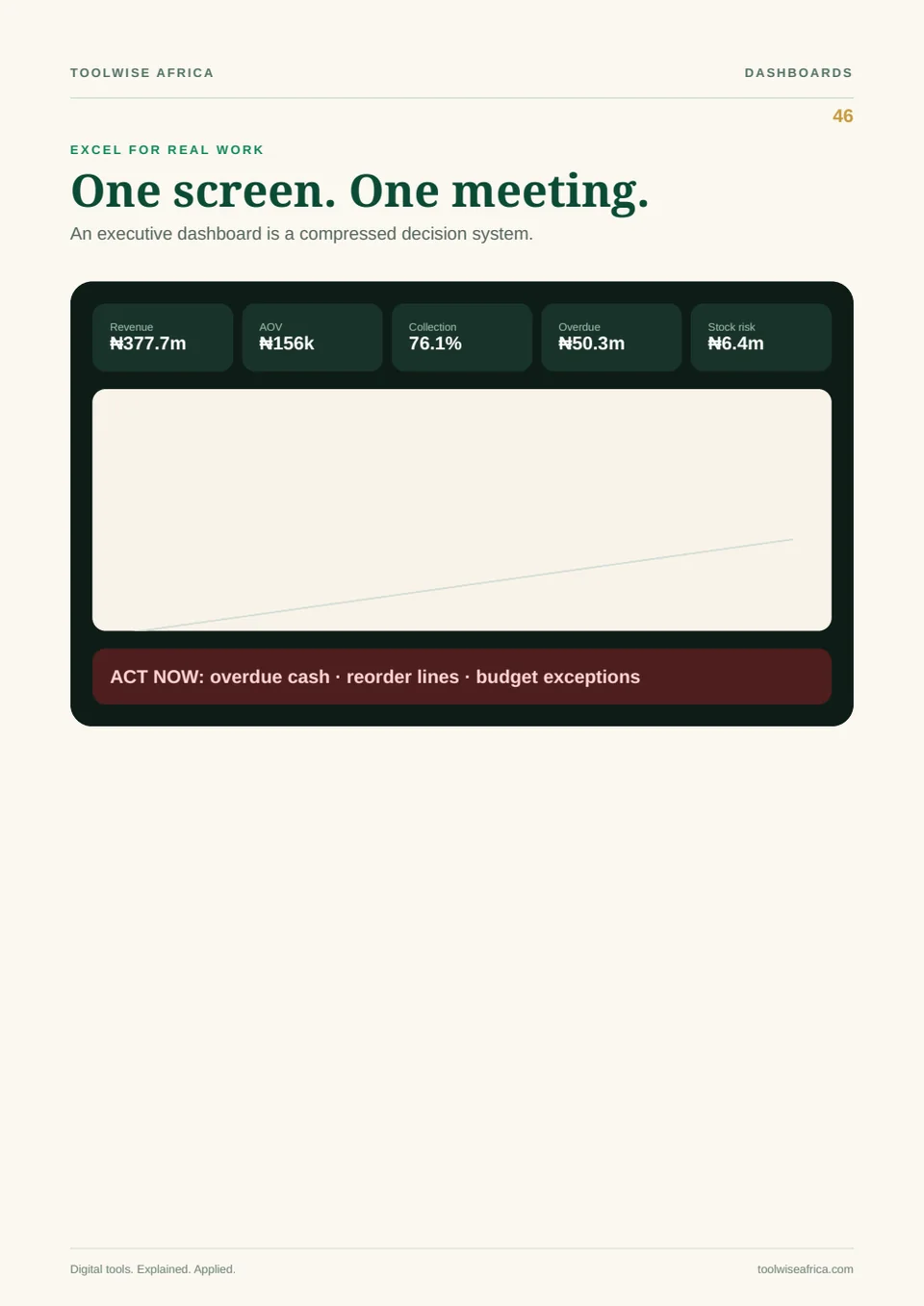
Pivot tables and dashboards are not decoration. They should expose material changes, outliers and drivers. Every visual should lead to a useful question or recommendation.
Practise with complete tasks
The fastest improvement comes from end-to-end exercises: receive the file, clean it, calculate, investigate, summarise and present. Realistic datasets build judgement that isolated formula drills cannot.
 ₦19,500